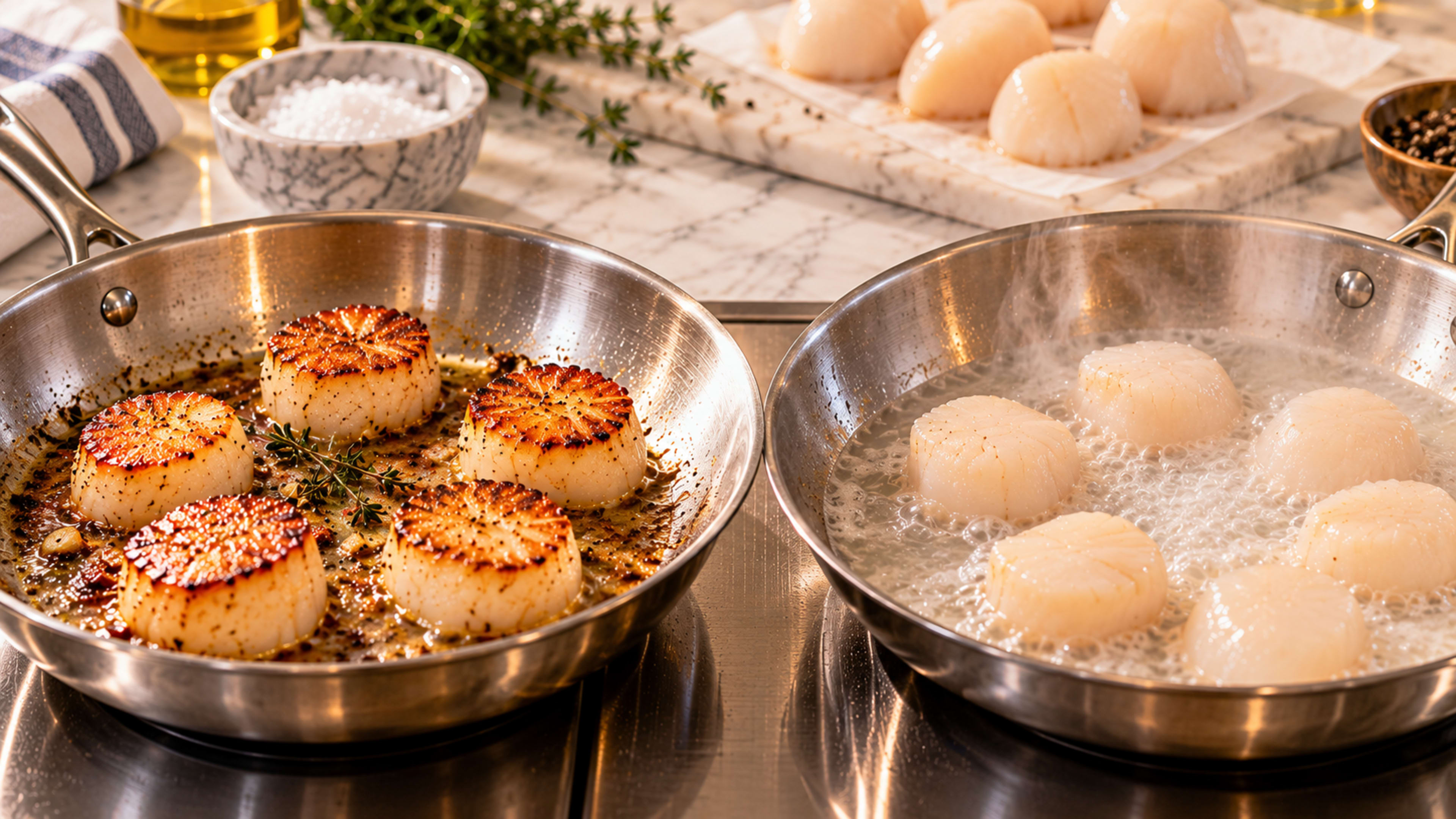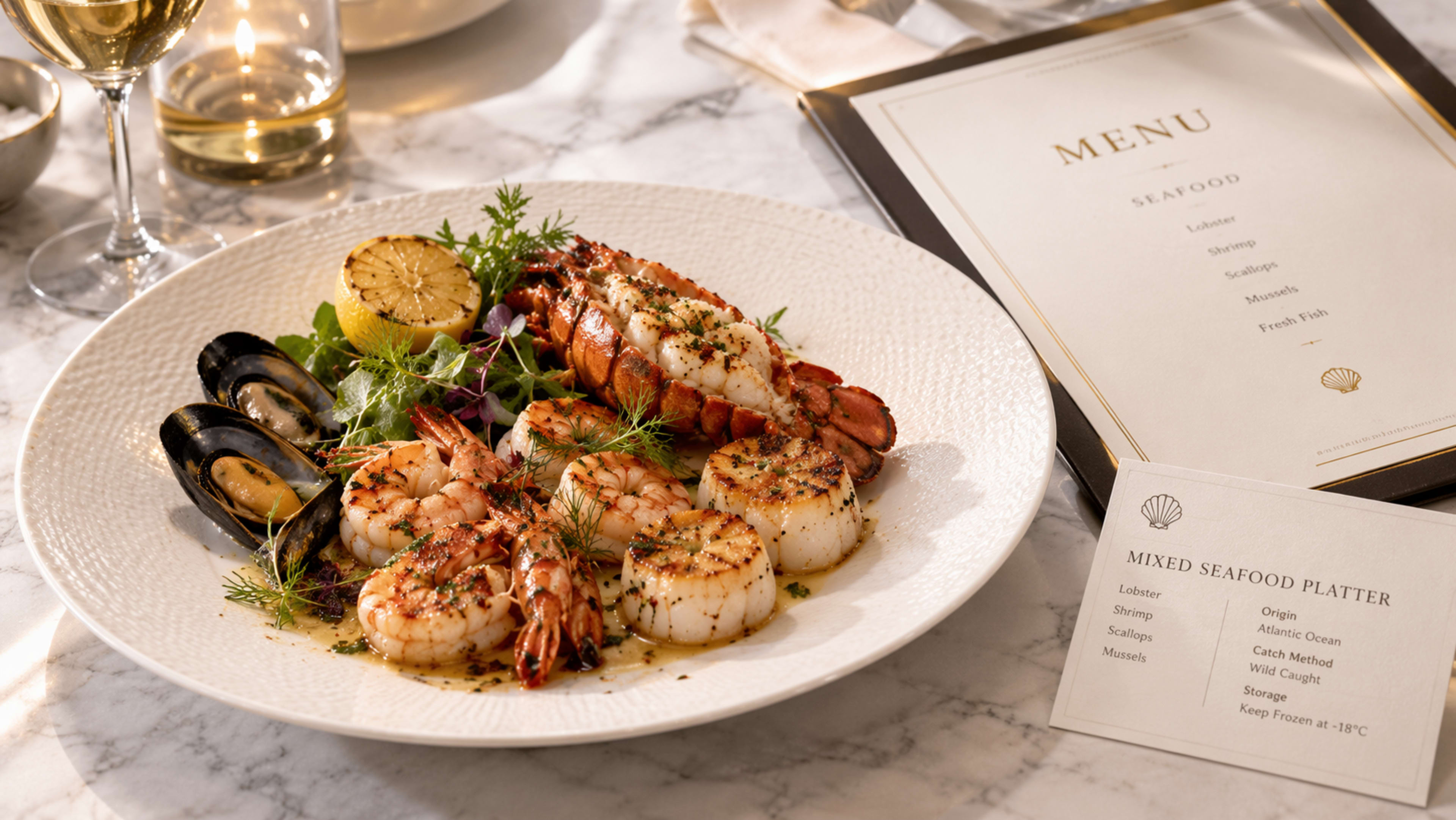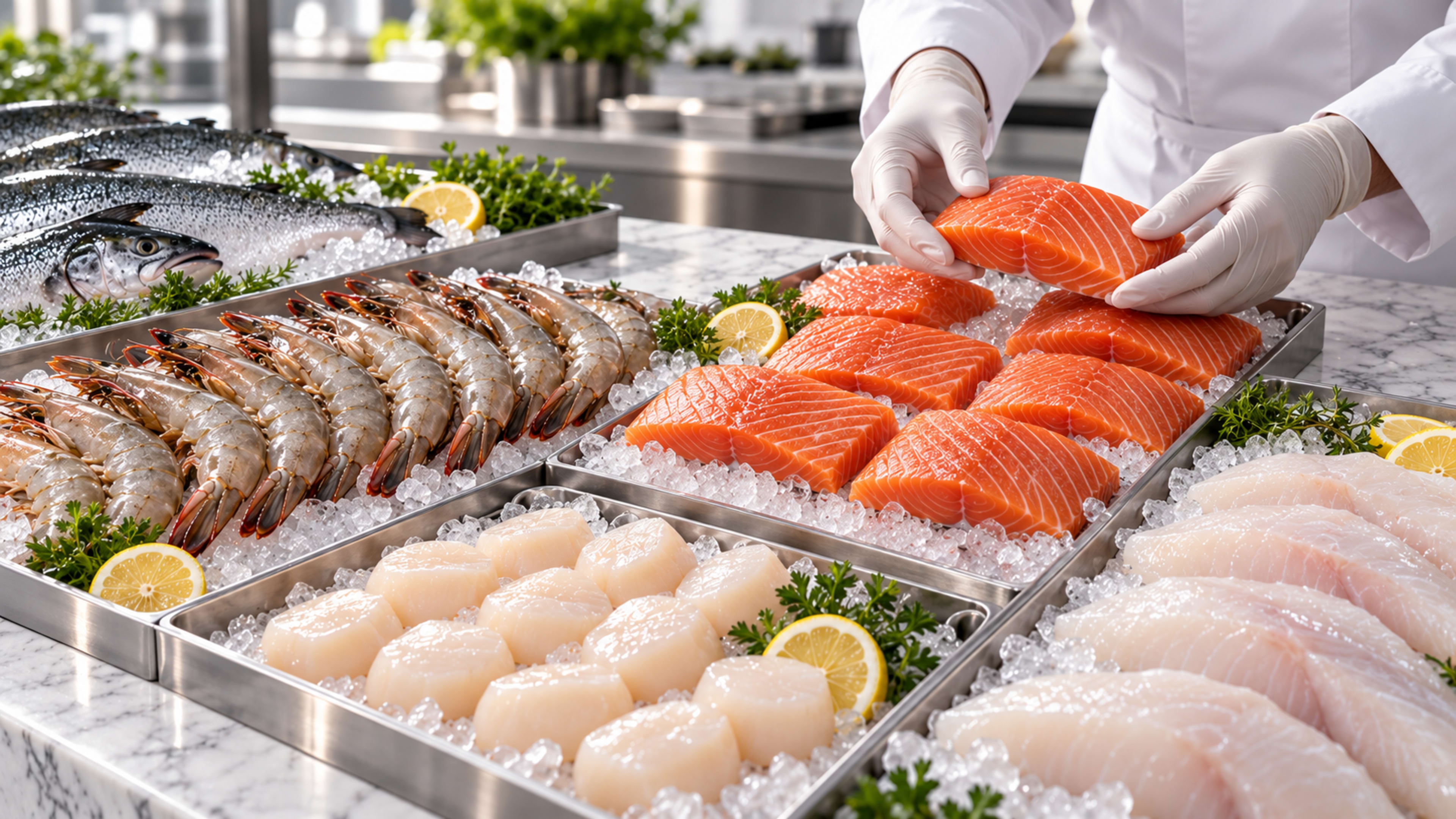
It is the middle of dinner service at a high-end hotel restaurant. The pass is full, tickets are moving one after another, and the chef de cuisine is calling out plating notes before the next wave of orders lands.
Nobody in that kitchen should be wondering whether tonight’s shrimp matches the agreed grade, whether the salmon will portion the way the previous delivery did, or whether tomorrow’s seafood order will arrive on time.
Those questions should already have been settled.
That is the real function of a professional seafood supplier: not to deliver one impressive order, but to make seafood supply predictable enough that the kitchen does not need to think about it during service.
For hotels, restaurants, and catering operations, that distinction matters. A supplier is not being evaluated only on the seafood inside one box. The operation behind that box has to keep working across repeated orders, changing volumes, different service periods, and, in some cases, several properties.
Why One Good Delivery Proves Very Little
A trial order can show that a supplier is capable of delivering the required product once. It says far less about what will happen on the fortieth delivery.
A professional menu is built around a set of operating assumptions: a defined portion, a preparation method, an expected yield, and a food cost that depends on the product performing within an agreed range.
When a delivery falls outside those assumptions, the kitchen absorbs the difference. A fillet that varies significantly in thickness may require additional portioning adjustments. A shrimp count that moves away from the agreed grade can change the number of pieces required per plate. Unexpected trimming reduces the amount of usable product available from the order.
None of those differences needs to be dramatic to become commercially important. A few additional minutes of preparation, repeated across a busy week, become labor. A small change in usable yield, repeated across a season, becomes food cost.
That is why experienced procurement teams and F&B directors evaluate seafood suppliers less like a one-time purchasing decision and more like an operational relationship.
The useful question is not simply: is the product good? It is: how much uncertainty and kitchen disruption does this supplier remove over time?
What Actually Separates One Supplier from Another
Four areas help reveal whether a seafood supplier can support a professional hospitality operation beyond the first successful order.
Specification Control
The first question is whether the product agreed during purchasing can continue to arrive in the form the kitchen planned around. That can include grading, size range, cut, trim, preparation format, and other product requirements relevant to the dish.
A kitchen that has costed a recipe around a particular shrimp grade or salmon format needs that agreement to hold across repeated deliveries.
This becomes especially important over time. The person placing the fiftieth order may not be the same chef or procurement manager who originally agreed the specification. A strong supply process should not depend on individual memory.
Delivery Performance
Product specification solves only part of the problem. The seafood also needs to arrive according to a schedule the kitchen can operate around.
Procurement should understand the required lead time, available delivery days, expected delivery window, and how those commitments work during higher-volume periods.
A supplier may provide an excellent product and still be difficult for a professional kitchen to use if ordering and delivery expectations are unpredictable. For hospitality businesses, a known delivery model allows purchasing, inventory, and production planning to work together.
Handling and Product Condition
The kitchen also needs to consider what happens before the delivery reaches the property. Storage, transportation, traceability, and food-safety systems influence the condition in which seafood arrives.
This is where a professional seafood distribution company does more than move products between locations. The distribution process has to protect the product standard procurement and the kitchen expected to receive.
Food-safety systems matter here because they provide evidence that handling is being managed through defined procedures rather than a general promise that products are “handled carefully.”
Distribution Reach
The final question is geography. Can the supplier support the locations where the business actually operates?
A supplier may perform perfectly for one restaurant and still be the wrong operational fit for a hotel group, resort business, or catering operation working across several destinations.
Consider a mid-size hotel group serving the same scallop dish at two properties, one in Cairo and another on the Red Sea coast. A supplier may be able to support the Cairo property frequently while working to a different delivery schedule for the coastal property. The issue is not necessarily the quality of the scallops. The issue is whether delivery performance and distribution reach allow the same menu to operate predictably across both locations.
That is the type of weakness a single trial order at one property will rarely reveal.
A supplier that performs strongly on the first delivery but cannot sustain specification, handling, delivery performance, and geographic coverage over time may not be the right long-term operational fit.
Where Food Box Fits into That Standard
Food Box has supported Egypt’s hospitality industry for more than 10 years and currently supplies more than 200 hospitality partners, including hotels, resorts, restaurants, and catering businesses.
Its operating standards include HACCP and ISO 22000 food-safety systems alongside Halal certification, providing procurement teams with a documented starting point when evaluating product handling and food-safety practices.
Learn more about Food Box and its food-safety standardsFood Box’s account managers customise product specifications, order schedules, and volume pricing around each partner’s operational requirements. That matters because specification control is most useful when it is built into the supplier relationship rather than discussed only after a product arrives outside expectation.
Delivery coverage is published by destination rather than presented as a general promise. Food Box’s current schedule includes:
• Cairo and Giza: daily delivery, 6 AM to 12 PM.
• Alexandria: three deliveries per week, with 48-hour advance ordering.
• Hurghada and the Red Sea: two deliveries per week, with 72-hour advance ordering.
• Sharm El-Sheikh: two deliveries per week, with 72-hour advance ordering.
• North Coast: daily delivery during the summer season.
View Food Box delivery areas and schedulesFor procurement, a published city-specific schedule provides something commercially useful: the ability to plan lead times around known logistics instead of renegotiating delivery expectations order by order.
The same operational logic becomes more important as volume increases. Food Box’s catering and event supply supports weddings, corporate events, private celebrations, hospitality events, seafood stations, and bulk seafood requirements, where planning has to hold across larger, date-specific service commitments.
The Evaluation That Actually Matters
A trial order can tell a chef whether a product looks promising. It cannot prove whether the supplier relationship will continue to work through the busiest week of the season, after dozens of repeated orders, or across several properties operating at the same time.
That evaluation takes longer. It asks whether the agreed specification continues to hold, whether delivery commitments remain workable, whether the product reaches the kitchen in the expected condition, and whether the supplier can support the scale and geography of the business.
Before committing to a seafood supplier, procurement and kitchen teams should therefore ask concrete questions:
• What is the delivery schedule for our location?
• How much lead time is required for regular orders?
• What changes for rush, seasonal, or event requirements?
• How are product specifications agreed and recorded?
• What happens if a delivery falls outside the agreed specification?
• Can the same requirements be maintained across repeated orders?
• If we operate several properties, can the supplier support all of them within workable schedules?
The quality of the answers matters. A supplier that can give procurement clear information about specifications, lead times, coverage, and operating procedures is easier to build a kitchen around than one that can only promise “quality products” and “reliable service.”
The strongest seafood supplier relationships are not defined by one impressive delivery. They are defined by how little the kitchen has to think about the supply chain once service begins.
If your hotel, restaurant, or catering operation is evaluating seafood suppliers against that standard, Food Box’s team can discuss product specifications, delivery coverage, volumes, and availability for your operation.