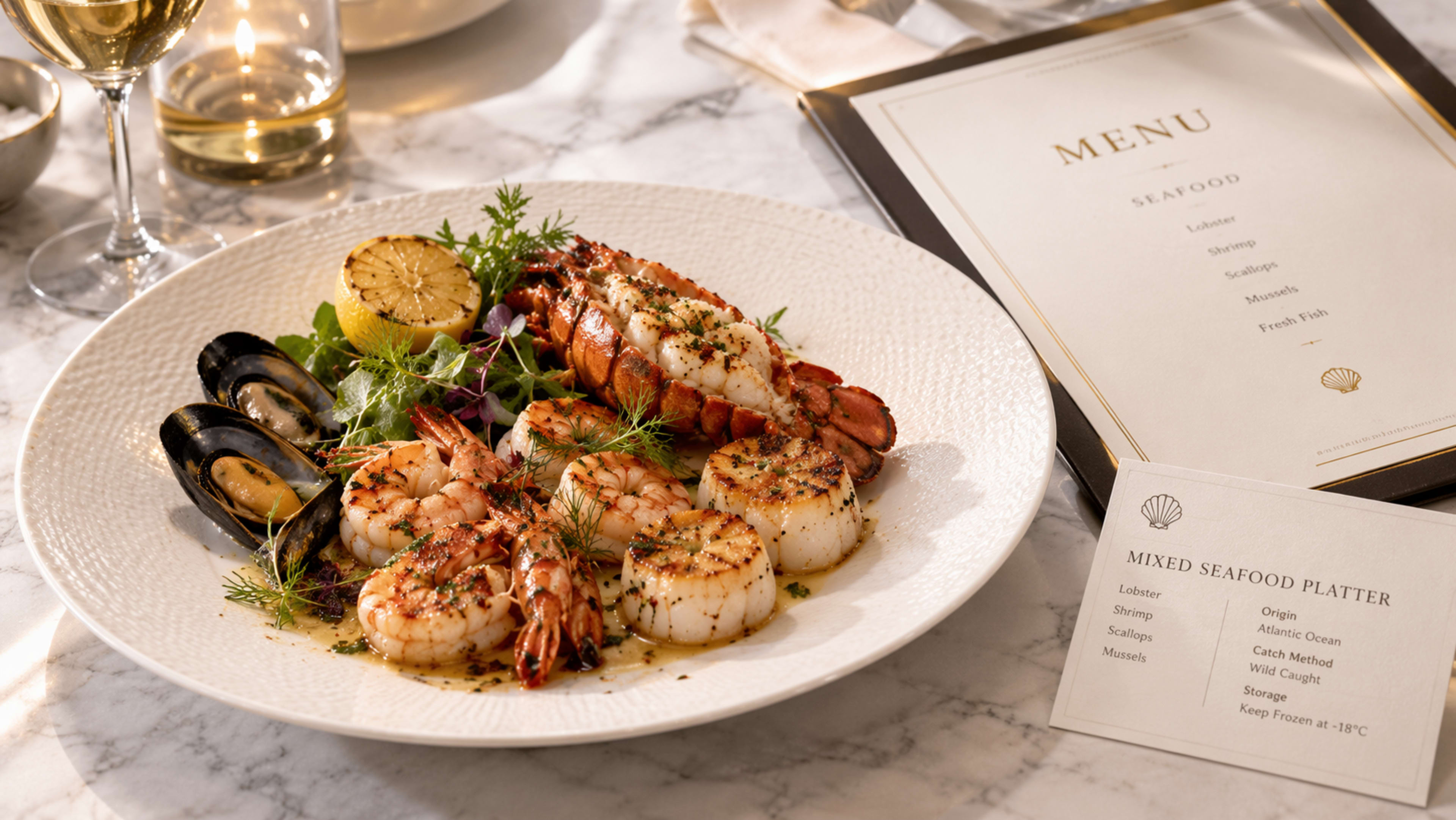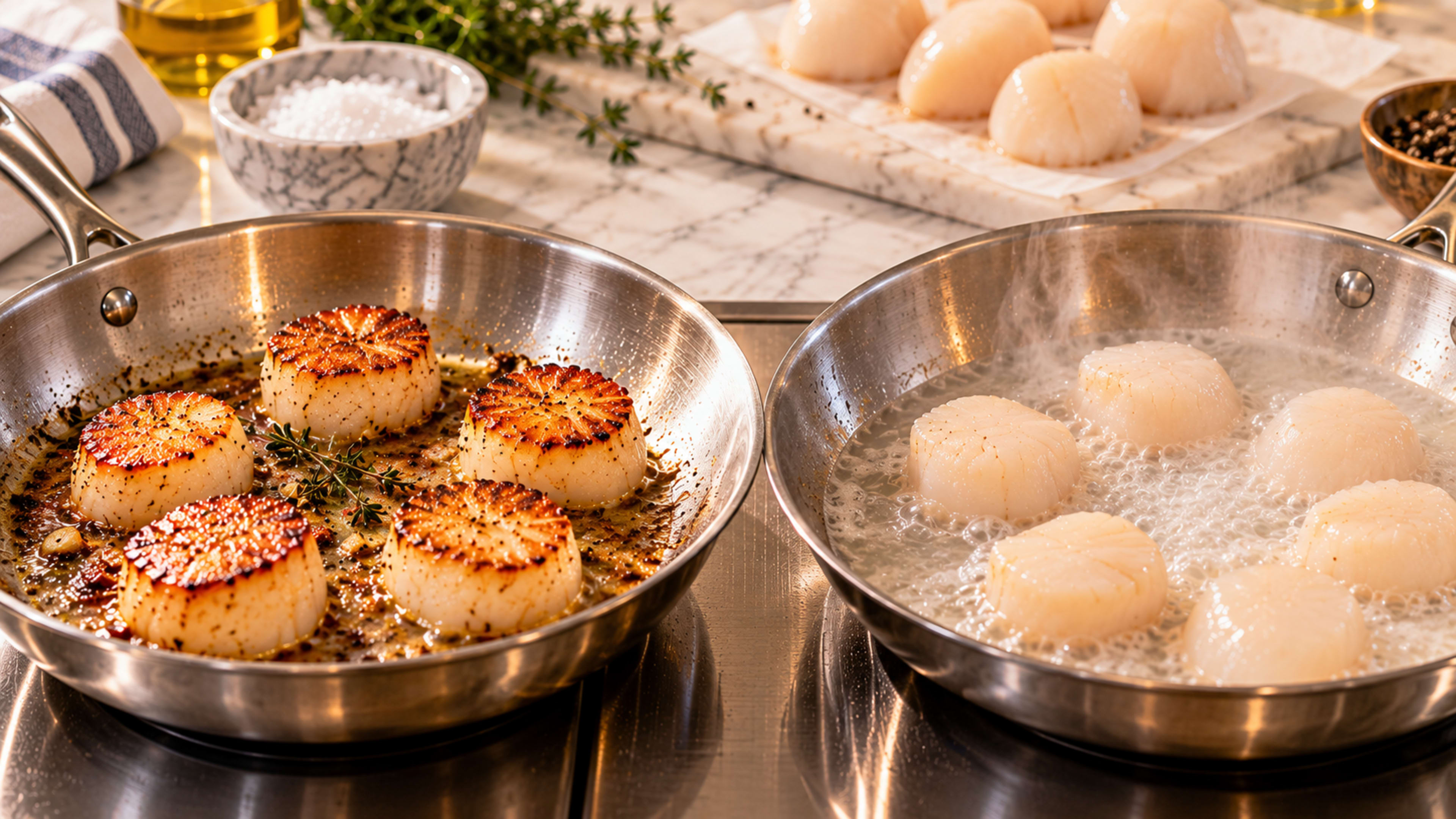
A chef places three scallops into a hot pan, expecting the golden crust developed during menu testing.
Instead, liquid begins collecting around them. The scallops take longer to brown, the cooking process becomes harder to control, and the finished dish looks different from the version the chef originally approved.
The pan temperature, batch size, and preparation method may all contribute to the result. But another factor deserves attention before the next order is placed: how the scallops were processed before reaching the kitchen.
In seafood purchasing, scallops are sometimes described as dry-packed or wet-packed. These terms relate to differences in how the product has been handled and whether it has undergone treatment intended to increase moisture retention.
For professional kitchens, understanding that distinction can help explain why two scallop products that appear similar on a quotation may behave differently during cooking.
What Dry and Wet Scallops Actually Mean
Scallops naturally contain water. The difference between products commonly described as dry-packed and wet-packed is not simply whether they feel moist.
In commercial usage, dry-packed scallops generally refer to scallop meats that have not undergone additional water-retention treatment.
Wet-packed scallops commonly describe products treated with water or solutions containing moisture-retaining ingredients, such as sodium tripolyphosphate (STPP). These treatments can influence how much water the scallop retains during processing and storage.
They are not necessarily intended to disguise a poor product. Moisture-retention treatments can serve technological purposes, but they change the characteristics of the product being purchased.
The Codex Alimentarius Code of Practice for Fish and Fishery Products recognises water and phosphate treatments in certain quick-frozen scallop products and addresses the need for appropriate processing controls and accurate product labelling.
For procurement, this creates an important distinction. The terms dry and wet can provide a useful starting point, but they are not sufficient seafood product specifications on their own.
Buyers should confirm whether added water or moisture-retaining ingredients have been used, what processing information is available, and how the product is described on its documentation. This is particularly relevant when the cooking method depends on consistent surface browning.
Why Moisture Changes the Searing Process
A successful scallop sear depends on transferring sufficient heat to the surface of the product. As the surface heats, the reactions responsible for browning can create the golden appearance and developed flavour associated with pan-seared scallops.
Excess surface moisture interferes with that process because heat is initially used to warm and evaporate water. When substantial liquid collects in the pan, the scallop may cook in that moisture rather than develop the intended seared surface. The chef may need additional time to achieve browning, potentially changing the texture of the finished product.
That does not mean every wet-packed scallop will fail to sear, or that every dry-packed scallop will automatically produce a perfect result. Cooking performance depends on several interacting factors.
The starting temperature of the scallops, the amount of surface moisture after thawing, the equipment being used, and the number of scallops placed in the pan all affect the result. A poorly managed cooking process can produce disappointing browning even with an untreated product.
Likewise, a moisture-treated product may perform satisfactorily in an application that does not depend on a pronounced seared crust.
For a professional kitchen, the practical question is not which label sounds better. It is whether the scallop’s characteristics support the cooking result the chef needs.
Moisture Treatment Is Different from Protective Ice Glazing
Frozen seafood buyers also encounter another form of water during purchasing: protective ice glazing.
Ice glazing refers to an external layer of ice used to help protect frozen seafood from dehydration during storage.
Moisture-retention treatment is different. Water or a water-and-phosphate solution may be introduced during processing to influence the moisture retained within the scallop meat.
The two should not be treated as interchangeable. Removing external protective ice does not necessarily remove water retained within the product as a result of processing. That distinction matters when reviewing product descriptions, net weights, and cooking characteristics.
It also means a buyer should not assume that a scallop product has undergone phosphate treatment simply because it is sold frozen or protected by an ice glaze. The relevant processing information needs to be confirmed for the specific product.
The Cooking Application Determines What Matters
Not every scallop dish places the same demands on the ingredient.
Consider a fine-dining restaurant serving three pan-seared scallops as the main feature of a starter. The dish depends on a controlled presentation, consistent surface colour, and a texture the chef can reproduce during service. Unexpected differences in liquid release or cooking behaviour may require additional adjustments at the station.
In this application, processing characteristics and moisture management deserve particular attention.
Now consider a different preparation in which scallops are incorporated into a sauce, seafood filling, or mixed dish. The product still needs to meet the kitchen’s seafood product quality and safety requirements, but the importance of developing an individual golden crust may be lower. That can change which characteristics matter most during product selection.
Neither application automatically requires the most expensive available scallop. The appropriate product is the one that performs as intended in the specific dish.
For procurement, this means the kitchen’s cooking method should influence the purchasing conversation rather than being considered only after delivery.
A Product Trial Should Reproduce Real Kitchen Conditions
A scallop can perform well in a small tasting and behave differently during a busy dinner service. That is why a useful product trial should reflect how the kitchen will actually prepare the dish.
For a pan-seared application, the chef can compare suitable product samples under controlled conditions. The comparison should begin with similar scallop sizes and the preparation instructions relevant to each product. Where practical, the kitchen should use the same equipment, cooking method, batch size, and intended finished portion.
Several observations can help identify meaningful differences:
• Liquid release: Does substantial moisture collect in the pan during cooking?
• Browning: How consistently does the surface develop the intended colour?
• Texture: Does the finished scallop meet the chef’s expectations for the dish?
• Preparation: Does one product require more draining or surface drying before cooking?
• Repeatability: Can the result be reproduced across several batches rather than achieved only once?
These observations are more useful than relying entirely on how the frozen product looks when the packaging is opened. They also help distinguish a product issue from a cooking-process issue.
For example, if both samples release excessive liquid when the pan is overcrowded, the equipment and batch size may need attention before procurement draws conclusions about product differences.
A controlled trial cannot guarantee identical performance across every future delivery, but it provides a more reliable starting point for product evaluation.
Preparing Frozen Scallops for Better Cooking Consistency
For kitchens using frozen scallops, preparation after delivery is another important part of the process. The product should be stored and thawed according to its instructions and the operation’s food-safety procedures.
The US Food and Drug Administration recommends thawing frozen seafood gradually under refrigeration, with controlled alternatives available when faster preparation is necessary.
After thawing, the kitchen should manage excess surface moisture before a pan-seared preparation. NOAA Fisheries’ scallop cooking guidance also emphasises drying scallops before searing and avoiding overcrowding the pan.
These steps help the chef establish more consistent cooking conditions. However, they do not change the underlying processing characteristics of the purchased product. Drying the surface of a scallop that has undergone moisture-retention treatment does not necessarily make it equivalent to an untreated scallop.
For professional kitchens, consistent results depend on understanding both the ingredient and the preparation method.
Why Processing Information Matters to Procurement
A scallop quotation may include the size, weight, packaging format, and price. But when cooking performance is important, processing information can be equally relevant.
Two suppliers may quote scallops with similar size descriptions while offering products that have undergone different treatments. Those products may not behave identically during preparation.
Procurement should therefore clarify the information needed to make a meaningful comparison. That may include whether the scallops have been treated with added water or phosphates, how that treatment is declared, and what preparation conditions the supplier recommends.
The purpose is not to reject every treated product. It is to understand what is being purchased and whether it fits the intended use.
Price should also be interpreted alongside the actual product characteristics and verified kitchen performance. A higher-priced scallop is not automatically the best choice, and a lower-priced product is not necessarily unsuitable.
The commercial decision becomes more meaningful when procurement and culinary teams evaluate products against the same kitchen requirements.
Where Food Box Fits into Scallop Purchasing
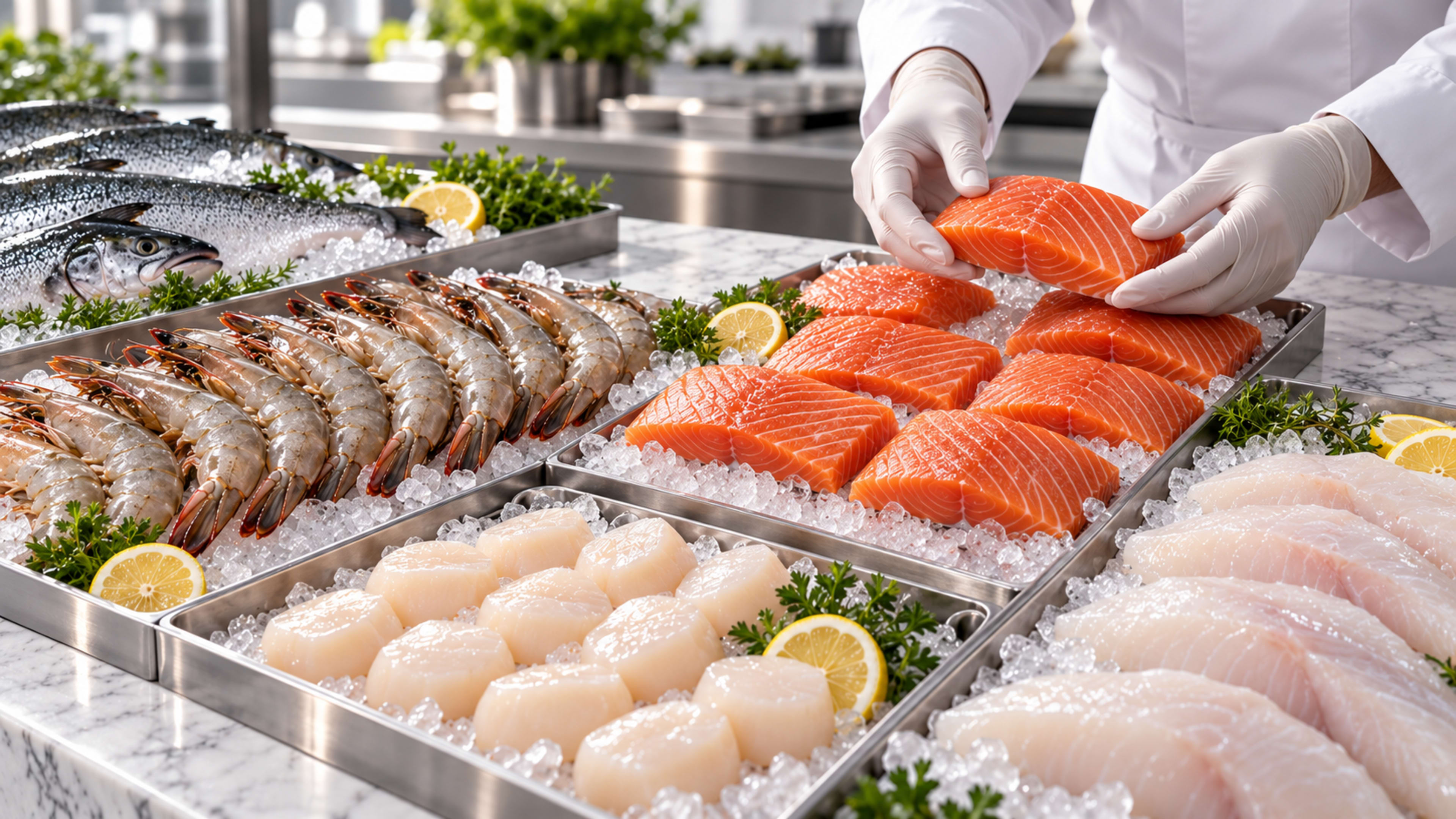
Scallops are one of Food Box’s core seafood categories, alongside shrimp, salmon, and lobster. The company supplies frozen seafood to professional hospitality operations in Egypt, including hotels, restaurants, resorts, and catering businesses.
Food Box states that its account managers work with professional buyers to customise product specifications, ordering schedules, and volume pricing around operational requirements.
For a kitchen developing a pan-seared scallop dish, the purchasing discussion may therefore include the desired product size, available processing information, preparation requirements, and expected volume.
However, Food Box’s public website does not confirm whether its current scallop range includes untreated dry-packed products, moisture-treated products, or particular phosphate-processing specifications. Those details should be confirmed directly rather than inferred from the category name.
The useful starting point is to describe the cooking application and determine which currently available product characteristics can support it.
The Best Scallop Is the One That Performs in the Pan
Return to the chef preparing the three-scallop starter. The challenge is not simply to purchase an attractive seafood product. It is to achieve the intended result consistently during service.
Understanding dry-packed and wet-packed scallops helps explain how processing and moisture characteristics may influence that result. But the final decision also depends on the kitchen’s preparation method, equipment, portion requirements, and actual product testing.
Before confirming a scallop order, professional culinary and procurement teams should understand how the product has been processed, what preparation it requires, and whether its cooking performance suits the intended dish.
A label can describe a product. A properly conducted kitchen trial helps determine whether it works.
For hotels, restaurants, and catering operations evaluating scallop requirements, Food Box’s team can discuss currently available products, specifications, volumes, and delivery arrangements.
Contact Food Box